
(Note: As I have done in past elections, I am running a series of Q&As for Democratic judicial candidates. I ran a series of these for candidates in contested primaries, and now these are for the rest of the candidates. I am running these responses in the order that I receive them from the candidates. Much more information about Democratic candidates, including links to interviews and judicial Q&As, can be found on Erik Manning’s spreadsheet.
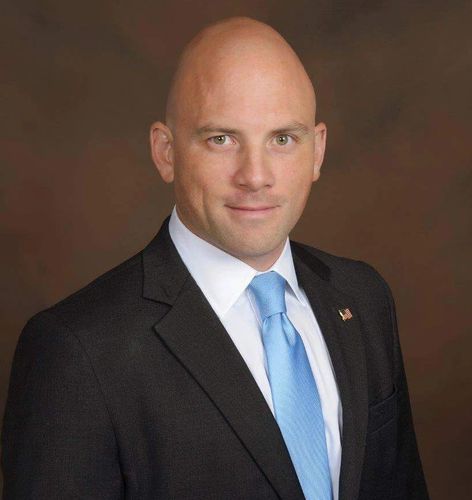
Judge Cory Sepolio
1. Who are you and in which court do you preside?
Hello. I’m Cory Don Sepolio, judge of the 269th Civil District Court.
2. What kind of cases does this court hear?
This is a civil district court. Texas civil district courts hear disputes involving money, damages or rights, They preside over important matters such as personal injury, oil and gas rights, breach of contract claims, water rights, government taking land, business disputes, title disputes involving land, criminal expunction cases, emergency restraining orders, and election contests. Because they have general jurisdiction, district courts also take on any civil matters not specifically assigned to other courts, allowing them to serve as Texas’s broad, catch‐all forum for resolving significant legal disputes. In addition, the legislature assigns several administrative duties to Texas civil district courts as well.
If a civil case in Texas is substantial, complex, or doesn’t fit neatly into another court’s jurisdiction, chances are it’s heard in a district court.
3. What have been your main accomplishments during your time on this bench?
As Judge, for the past eight years, I have a reputation for being trusted by both sides of the bar. I am one of the highest rated judges in the county. Out of the civil district court judges I am among the top in closures, trials. When hurricane Harvey bogged down the courthouses I continued to move our docket. When the pandemic closed the courthouse, I worked with county leadership and court administration to continue to move cases in a safe and equitable manner. I appoint lawyers from underrepresented communities to roles in the 269th. I mentor interns, young attorneys, and judges.
4. What do you hope to accomplish in your courtroom going forward?
I will continue to reduce the court’s docket with an eye towards justice and equity. I plan to work with our partners in the courthouse to create space for expedited mediations and trials to allow parties who wish, to obtain a quick and cost effective resolution to their claims.
5. Why is this race important?
I respect our system of resolving disputes and want to ensure the 269th will have the experience necessary to continue our work.
6. Why should people vote for you in November?
As a trial attorney I have a proven record of exemplary results. I have 28 years of legal experience. The benefit of 23 years in high stakes litigation, including 100 jury trials across Texas. I’ve handled everything from common law negligence, wrongful death, breach of contract cases, to capital murder and intoxicated manslaughter. I have represented hundreds of civil clients, both plaintiffs and defendants in court. I supervised attorneys, peace officers, paralegals, secretarial staff, court staff and interns. I am qualified above others in Experience, Temperament, and Impartiality for this bench.
PREVIOUSLY:
Judge Damiane Dianne Curvey, 280th Family District Court
Judge M. Monica Singh, Harris County Civil Court at Law #4
From the primaries:
Judge Kristen Hawkins, Supreme Court Justice, Place 7
Sarah Beth Landau, Chief Justice of the Fourteenth Court of Appeals
Judge Tanya Garrison, 157th Civil District Court
Julia Maldonado, 183rd Criminal District Court
Judge Brian Warren, 209th Criminal District Court
Judge Josh Hill, 232nd Criminal District Court
Judge Leah Shapiro, 315th Juvenile District Court
Judge James Horwitz, Harris County Probate Court #4
Ebony Williams, Harris County Civil Court at Law #2
Judge Andrew Wright, Harris County Criminal Court at Law #7
“If a civil case in Texas is substantial, complex, or doesn’t fit neatly into another court’s jurisdiction, chances are it’s heard in a district court.”
Good grief. … What have we learned? …. That district courts are courts of general jurisdiction?
If you are plaintiff’s lawyer, you will have to know where venue is proper, and which court to choose, assuming you have a choice: District or County, for example, in Harris County, or JP for smaller claims, and if the latter, which one.
If you are hired to defend, you may wish to check whether jurisdiction is proper and venue, and whether it’s advantageous for your client to consent to the plaintiff’s choice or file a motion to transfer venue or to enforce an arbitration clause or forum-selection clauses, if applicable. Or not, with the benefit of knowing which judge you got (in Harris County you will know, not in Bexar or Travis where they are on a carousel).
If you are the defendant who can’t afford a lawyer, you are probably screwed because you don’t even know what choices you have, or what happens if you ignore the suit papers (“citation”) served upon you or attached to your front door. You certainly don’t get to choice the court or judge.
If you are a lawyer-voter, judicial candidates doesn’t have to tell you about what a district court does and that local bar conducts a popularity poll.
These kinds of generalities are useless and help no voter decide intelligently which particular judge to vote for. Nor do they advance public understanding of the local court system.
Can’t a Civil Division candidate not at least say we don’t hear family law cases here and that most debt collection cases to to JP courts and county-courts-at-law? And evictions are handled exclusively in JP courts, with appeal to county court?
And, in the case of that other judicial candidate, that the 280th district would be better called a family destruction court, rather than a “Family Court,” a court that takes rights away, where one side gets are free lawyer and to her other side is out of luck.
Incidentally, family courts and juvenile courts are district courts too. And then there are the criminal district courts as distinct from the criminal courts-at-law.
Bottom line: No need to solicit info about the type of court, not to mention potentially misleading information. Try to get candidate or incumbent-specific information, such as personal and professional background, as in Q. No. 6.
If a candidate runs for a district court bench in the Civil Division and has only (or mostly) done criminal defense work (not the case here), it should be a red flag for voters.
How long has the candidate been out of law school and what other experience does she/he have. That kind of info would be actually be useful. Does the candidate have a personal agenda, such as righting wrongs suffered in childhood from the bench as judge?
Respectfully, “I move cases along…” is blah-blah that diminishes the function of the judicial office.
I mean, don’t they all move cases along? Except perhaps Ursula Hall?