
We’ll start at the low end.
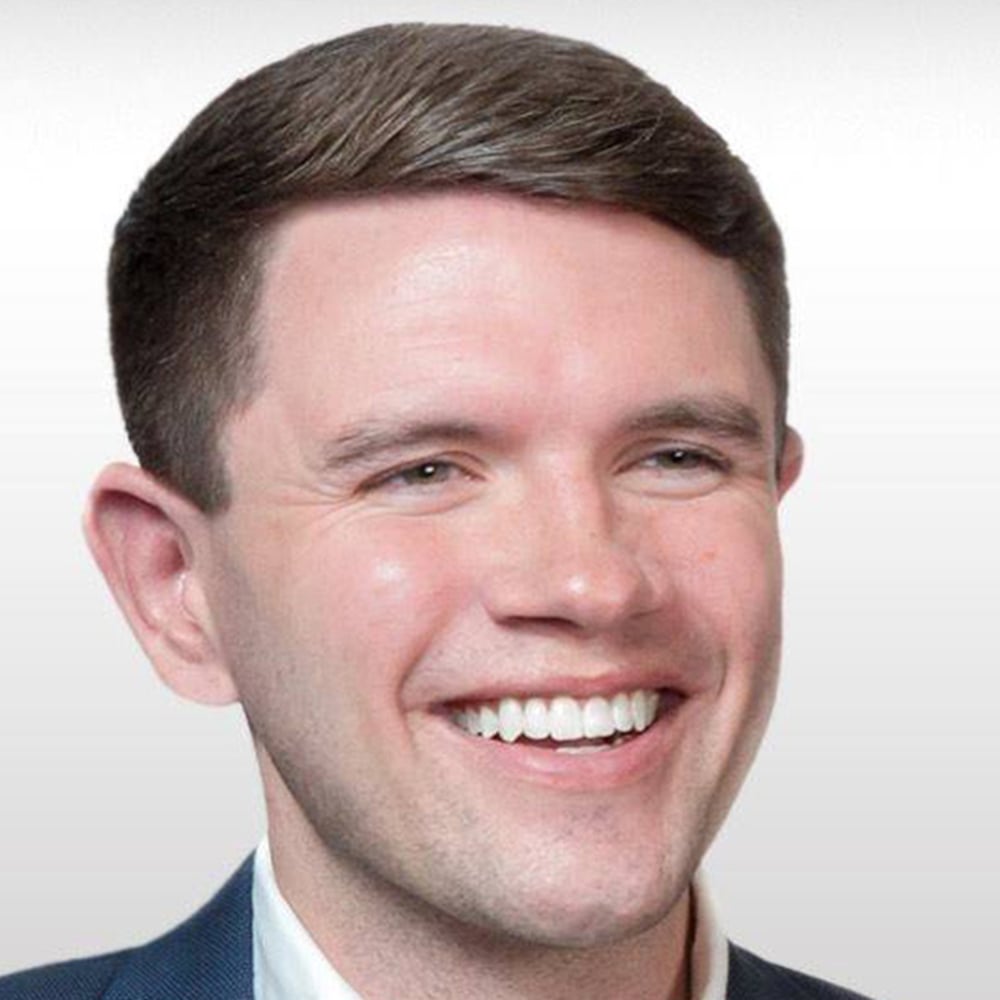
Rep. James Talarico
As early voting continues in Texas, a new Fox News poll shows the state’s top-ticket race is tied.
Fox News released its poll on Oct. 21, showing Democrat James Talarico and Republican Ken Paxton tied at 49% each among likely Texas voters in the nationally watched Texas Senate race.
This marks a drop from Talarico’s two-point lead, 51% to 49%, in Fox News’ previous poll. The Fox News poll notes the shift comes from Paxton consolidating support among conservatives, rural voters, suburban women and voters who backed U.S. Sen. John Cornyn in the primary.
Here’s what the poll found and how it compares with other recent October polling.
The Fox News poll was conducted Oct. 15-19 among 2,011 registered Texas voters and 1,398 likely voters. The margin of error is 2 percentage points for registered voters and 2.5 points for likely voters.
Democratic polling firm Beacon Research and Republican polling firm Shaw & Company Research also jointly directed the poll.
[…]
Looking at the Hispanic vote in the state, the poll found that Hispanic voters are swinging back toward the Democrats. After backing former President Joe Biden by 25 points in 2020, they favored Trump by 1 point in 2024, according to the Texas Fox News Voter Analysis.
Now, the closely watched voting bloc favors Talarico by 30 points, 64% to 34%, and prefers Democratic control of the U.S. Senate by 29 points.
Talarico is also seeing stronger party loyalty — another factor making the race competitive. The poll found 98% of Democrats support Talarico, compared with 90% of Republicans supporting Paxton. Nearly 3 in 10 non-MAGA Republicans are crossing party lines to back Talarico.
“The race is going to come down to two basic questions,” said Republican pollster Daron Shaw, who helps conduct the Fox News Poll with Democrat Chris Anderson. “Do disaffected Republicans show up and, if so, do they grit their teeth and vote for a candidate who they have serious reservations about?”
The previous two Fox News polls were 51-48 and 51-49. I consider this to be float within the margin of error, and if Talarico is at +30 among Hispanic voters, I like where we are.
Texas Public Opinion Research (TPOR)—a nonpartisan polling initiative dedicated to exploring Texans’ beliefs and priorities—today released a new poll of Texas likely general election voters, focused on the 2026 statewide races, including the contests for U.S. Senate, Governor, Attorney General, Lieutenant Governor, Comptroller, Agriculture Commissioner, Land Commissioner, and Railroad Commissioner.
This is the third and final release in a series of monthly tracking polls that TPOR has released ahead of the November 3 election.
The poll finds Democrat James Talarico (51%) leading Republican Ken Paxton (47%) by four points in the U.S. Senate race. Meanwhile, Republican Greg Abbott (51%) leads Democrat Gina Hinojosa (48%) by three points in the Governor’s race. In the Attorney General’s race, Republican Mayes Middleton leads Democrat Nathan Johnson by two points (50% to 48%). Notably, the race for Texas Land Commissioner has narrowed to one point, with Republican Dawn Buckingham at 49% and Democrat Benjamin Flores at 48%.
See here, here, and here for previous TPOR polls. This is the closest margin they’ve had, but also the first time Talarico has been above fifty percent. They also had Jon Rosenthal trailing Bo French 48-50, though they didn’t include that in the opening paragraph for whatever the reason. The recent UT/Texas Politics Project poll was the last one to also survey each race, and they mostly had the Dem candidates up a point or two. It’s all close, I think we agree.
Despite being outspent by millions in TV advertising, Democratic Senate candidates narrowly lead their GOP opponents in three red states critical to control of the U.S. Senate.
A trio of new polls conducted as part of The Cook Political Report’s Battleground Project found Democrat Josh Turek ahead of Republican Rep. Ashley Hinson 46% to 44% in Iowa; former Sen. Sherrod Brown leading Republican Sen. Jon Husted 49% to 43% in Ohio; and former state Rep. James Talarico besting Republican Attorney General Ken Paxton 49% to 44% in Texas.
The polls, which were conducted for The Cook Political Report Oct. 9-13 by Democratic firm New River Strategies and Republican firm GS Strategy Group, also showed Democratic candidates leading in two of the three governors’ races in these states, each of which President Donald Trump won by double digits in 2024.
In Iowa, Democratic state Auditor Rob Sand leads Republican Zach Lahn by 11 points (54% to 43%). In Ohio, Democrat Amy Acton is ahead of Republican Vivek Ramaswamy by five points (49% to 44%). In Texas, incumbent GOP Gov. Greg Abbott is leading Democrat Gina Hinojosa by just two points (48% to 46%).
So we have three result, in which Talarico is tied, up by four, and up by five. I’ll take that. Gina Hinojosa has mostly been trailing in the recent polls (UT/TPP being the prime exception), but again, all indicators are that it’s close. The differentiating factor seems to be Talarico’s level of crossover support versus Hinojosa’s. I think if he can get to a certain level in the end, say 52 or 53 percent, he’ll have some coattails. Keep working it and we’ll hope for the best.
“‘The Fox News poll notes the shift comes from Paxton consolidating support among conservatives, rural voters, suburban women and voters who backed U.S. Sen. John Cornyn in the primary.'”
Translation: The Musk-funded airing of whoppers by TexasPAC is working.
If electoral democracy was ever a thing, it ain’t anymore. Change my mind.
FOX’S FAULTY REASONING
The Fox interpretation is mere fluff because the difference is so small as to fall within the sampling margin of error of the poll.
Some journalists are either ignorant or play dumb, or wish to deliberately mislead the public. If there is a margin of error of 2 percentage points, it means that the true number could be up by 2 or down by 2. It’s based on sampling theory and is probabilistic. The whole idea of sampling is to derive inferences from a findings in a sub-set of a population because it’s impractical or impossible to include everyone (the census would be an example of the latter, and is hugely expensive).
The gold standard is random sampling, which is never possible with prospective voters for various reasons and this introduces additional imprecision in results. An obvious problem is that respondents decline to participate and that the sample ends up being skewed because the decliners have different characteristics (and will vote differently when able to do so secretly) compared to those willing to share their political leanings, candidate perceptions and intentions to vote. There are various ways to try to correct for skews and assure greater representativeness (of the sample selectees relative to the entire population being investigated), but nothing is perfect.
https://uspollingdata.com/explainers/polling-margin-of-error/
DIFFERENT KINDS OF MARGINS
The margin of victory over an opponent (or estimated lead in a poll) is something different, though it is also expressed as a percentage (percentage point difference with respect to all votes cast, or to be cast, in the particular contest). In actual election results 1% is more than what is needed to win (50% +1 will do), but in a poll such 1% edge is meaningless because of the margin of error is typically 2 percentage points or more, and that goes in both directions: up and down, so the uncertainty spread is actually twice as large: 4 percentage points. And that’s not the only source of uncertainty.
Bottom line: The Fox interpretation about Paxton catching up and “consolidating” (whatever that means) is NOT supported by the data upon which it is based. There may be other evidence that the billionaire ads are working (or not working), but the reported poll data provides no clue.
LARGE DISPARITIES ARE A DIFFERENT STORY
On the other hand, if 80% of respondents report that they don’t know enough about named candidates in statewide races such Education Bd. candidates (see recent UH Hobby School poll), you can take that result as reliable because it far exceeds any margin of uncertainty, including sampling error. That type of data (indicator of ignorance as in lack of information) will also be useful to construct a Republican baseline vote once the actual election results are in. That’s because votes for these low-salience candidates will necessarily have to be based on party, incumbency, and inferences based on candidate names (sex, race, ethnicity, commonality) if voters don’t actually know anything about these candidates.
The same typically goes for judicial candidates as the Houston Chron. recently acknowledged in its mixed endorsements for the 1st and 14th COA, with the caveat that in very close elections, candidate-specific factors can be decisive. But pre-election polls can at best suggest that a race will be close, with no one really being able to say how close.